
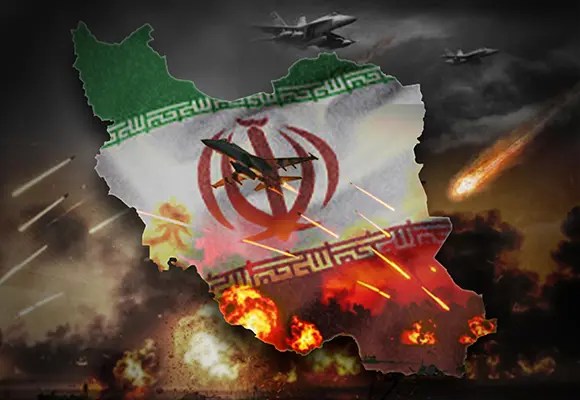
The current war in the Middle East cannot be understood merely as a military confrontation among Israel, the United States, and Iran. The central issue is no longer who initiated the war, but who will ultimately succeed in producing regional meaning, securing legitimacy, and consolidating hegemonic superiority. For this reason, the conflict must be analyzed not only through military developments but also as an ideological, political, and social struggle for hegemony.
At this point, Antonio Gramsci’s theory of hegemony provides a particularly illuminating framework. Gramsci’s distinction between “war of position” and “war of maneuver” is especially useful for understanding the nature of the current conflict in the Middle East. A war of maneuver refers to direct, rapid, and high-intensity military force. A war of position, by contrast, is a deeper and more enduring struggle waged through institutions, social fault lines, ideological domains, proxy actors, and discursive superiority. In today’s Middle East, the visible military confrontations on the battlefield are often only the hardened and violent manifestations of these longer-term positional struggles.
Since the 1979 Revolution, the Iranian regime has sought to construct regional hegemony primarily through a war of position. Rather than attempting to establish conventional superiority outright, Tehran pursued a multilayered strategy of influence embedded in social and political fault lines across the region. The first pillar of this strategy was the formation of a sphere of influence through the Shiite axis in Iraq, Syria, Lebanon, and Yemen. This network enabled Iran not only to acquire allies but also to develop security and political structures aligned with its own strategic vision. The second pillar involved building relations with political Islamist movements that were not necessarily Shiite in character. In arenas such as Egypt, Turkey, and Gaza, Iran viewed the rise of these movements, to varying degrees, as conducive to its broader regional vision. In this way, Iran attempted to generate hegemony not only through Shiite geopolitics but also through a broader Islamist political terrain.
At the same time, Israel was also engaged in its own regional war of position. The Abraham Accords, in particular, represented a major component of Israel’s attempt to establish a new hegemonic order through diplomatic normalization and regional integration, not merely military superiority. The objective was to push the Palestinian issue to the margins of the regional agenda, construct a new security architecture based on defining Iran as the common threat, and gradually normalize Israel as a legitimate and accepted actor in the Arab world. This was, for Israel, a hegemonic project that extended well beyond the battlefield.
In this context, the October 7 attacks can be interpreted not merely as a tactical or military operation, but as a strategic intervention aimed at disrupting the hegemonic line Israel was trying to construct through normalization. The attacks derived their main significance not from their immediate military consequences, but from the way they shattered Israel’s narrative of security, deterrence, and regional integration. In other words, October 7 did not primarily target Israel’s superiority in maneuver warfare; rather, it targeted the gains Israel had begun to accumulate in its war of position. In that sense, although the attack took the form of direct military action, it was also part of a broader positional struggle.
Israel’s response, by contrast, took the form of a classic war of maneuver. The devastating military campaign in Gaza, the destruction of civilian spaces, mass death, and widespread displacement reflected one of the harshest forms of direct force, aimed not only at crushing Hamas but also at destroying the broader Palestinian social base. Yet here a paradox emerged: Israel’s campaign of destruction generated a political climate that ultimately served Iran’s objectives in the war of position. The devastation in Gaza deepened anti-Israel and anti-American sentiment across the Arab and Muslim worlds, and injected new social energy into Iran’s long-standing anti-Zionist and anti-imperialist discourse.
For Iran, what matters here is not necessarily achieving a direct battlefield victory, but shaping the moral and political meaning of the war in its favor. Tehran’s long-term strategy has been to transform the conflict from a narrow question of Israeli security into a broader issue of regional justice, resistance, and legitimacy. The destruction in Gaza allowed this discourse to regain traction across Arab and Muslim societies. As public anger toward Israel and the United States intensified, particularly in countries ruled by authoritarian regimes, Iran increasingly appeared as the side of “resistance,” thereby gaining a wider sphere of political sympathy.
For the same reason, the war now being waged by the United States and Israel against Iran also bears the characteristics of a war of maneuver. Its objectives include decapitating Iran’s leadership, destroying its military and strategic capabilities, destabilizing the regime from within, and, if possible, laying the groundwork for regime change. Put differently, Washington and Tel Aviv seek to weaken Iran’s regional influence through direct military blows and to reassert their own hegemonic order. This is a rapid, violent, and top-down attempt to establish hegemony.
Iran’s response, however, is likely to be asymmetrical rather than symmetrical; that is, it will follow the logic of a war of position. Tehran will seek to widen the war as much as possible, increase the military and economic costs for the United States and Israel, and spread the burden of the conflict across the entire region and even the global system. Threatening energy routes, putting pressure on maritime trade, activating proxy forces, sustaining regional tension, and transferring the costs of war to allied regimes are all part of this strategy. For Iran, the key is not simply to retaliate militarily; it is to convert the consequences of a war initiated by the United States and Israel into a broader crisis of legitimacy for them.
In this context, the downing of American aircraft or the placement of Israeli cities under missile threat are not merely military acts. They are also symbolically significant. Hegemony rests not only on material capacity, but also on the image of invincibility. Demonstrating that U.S. air superiority or Israel’s claim to absolute security is not impermeable weakens their regional and global hegemony at the psychological level. Thus, even if Iran does not achieve outright military victory, it may still score a major success in the war of position by stripping its adversaries of their aura of invincibility.
The critical point, then, is this: Iran may lose the war militarily and still win the war of position. In a war of maneuver, the victor may simply be the side that destroys more. In a war of position, however, the victor is the one that determines the meaning of the war. By regionalizing the conflict, distributing its costs, undermining the legitimacy of authoritarian Arab and Muslim regimes, and strengthening the discourse of “resistance” among broader publics, Iran will seek to turn its military vulnerability into a political and ideological advantage.
Another important consequence of this process is the erosion of Israel’s long-standing discursive superiority in the West. For decades, Israel was positioned in the West not merely as a strategic ally but also as a political entity whose moral legitimacy was to be protected. The memory of the Holocaust, the language of security, and the narrative of liberal-democratic partnership formed the core pillars of this hegemonic framework. Yet the destruction in Gaza has severely shaken that foundation. Criticism of Israel has become more visible, more forceful, and more widespread in Western public opinion. This suggests that the hegemonic narrative Israel has long sought to sustain in the West is beginning to unravel.
At the same time, this unraveling has not produced only political criticism of the Israeli state; in some circles, it has also contributed to a dangerous rise in antisemitism. These two phenomena must not be conflated. The questioning of Israel’s legitimacy is not the same as hostility toward Jews. Nevertheless, it is evident that as Israel’s discursive hegemony has weakened, a broader climate of anger has emerged both in the West and across the Muslim world, and in some cases that anger has become intertwined with antisemitic tendencies. In that sense, hegemonic dissolution is producing not only political consequences but also serious social and cultural risks.
All of these developments bring us to the fundamental question: what kind of regional order will emerge in the Middle East from this point onward? If Iran, even while paying a high military price, continues to advance in the realm of political meaning and popular sympathy, this will directly affect the legitimacy of the region’s existing authoritarian regimes. In countries such as Turkey, Saudi Arabia, and Egypt, significant portions of the population may come to question their governments’ positions more sharply in an environment of rising anti-Israel and anti-American sentiment. This, in turn, could enable Iran to produce an ideological and political sphere of hegemony without direct occupation or territorial control.
Ultimately, the central issue is no longer who started the war, but who is able to produce regional meaning at its conclusion. The key question for the coming period, therefore, is this: will the authoritarian regimes in Turkey, Saudi Arabia, and Egypt quietly acquiesce to the rise of Iranian hegemony within their own societies, or will they attempt to form a new regional front to contain and roll it back? In all likelihood, the most consequential debate in the Middle East in the near future will revolve around this very question.
 Tarih, Siyaset ve Din